The Body: Our First Doorway to Awareness
Aug 30, 2026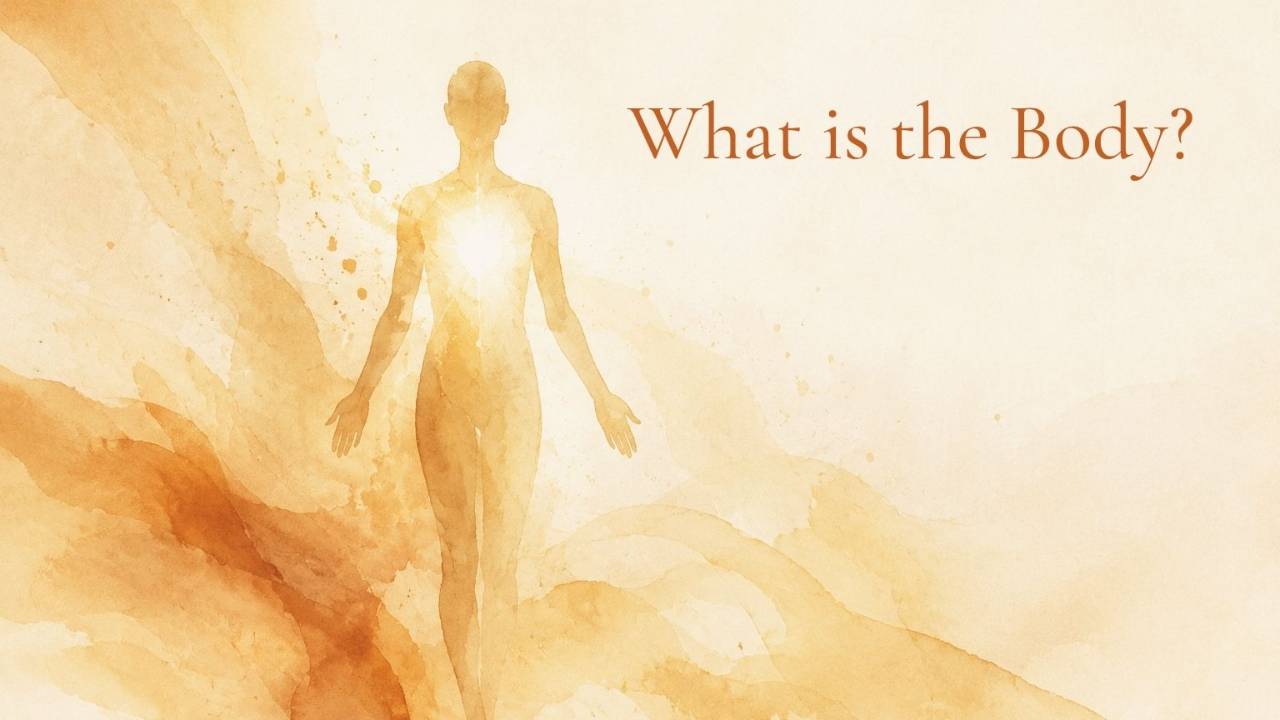
What is the body?
We speak of it as though the answer were obvious. We say my body in the same way we say my home, my clothing, or my possessions. Yet the body is more intimate than anything we could ever possess. Before we form our first thought, speak our first word, or create an identity, the body is already here, breathing, sensing, and receiving life.
We usually relate to the body through appearance, comfort, discomfort, health, or illness. We admire it, criticize it, protect it, compare it, and try to control it. But rarely do we stop and contemplate what it actually is.
Is the body something we are, or something through which we experience being alive?
The body is an extraordinary gathering of elements. It is bone, tissue, blood, water, movement, sensation, and energy. It carries the biological history of those who came before us. It is nourished by the earth, sustained by water, animated by breath, and warmed by the same sun that sustains every other living form.
Nothing in the body exists independently. Every cell depends upon countless conditions that we did not create and cannot entirely control. The heart beats without waiting for our instruction. The lungs continue their movement while we sleep. Digestion, circulation, regeneration, and repair happen mostly outside our conscious awareness.
We say, “I am breathing,” but most of the time, breathing is simply happening.
When we contemplate the body deeply, our sense of ownership begins to soften. We recognize that the body is not a fixed object under our command. It is a living process, changing from moment to moment.
The body we had as a child no longer exists. Even the body that awakened this morning is not exactly the body reading these words now. Cells are dying and renewing. Food becomes tissue. Breath enters and leaves. Sensations appear, change, and disappear. The body is never completely still, even when we are.
And yet, we often demand permanence from it.
We expect it to remain young, strong, attractive, comfortable, and predictable. When it inevitably changes, we may experience fear or disappointment. But the body has not betrayed us. It is simply expressing its nature.
The body is impermanence made visible.
To contemplate the body is not to reject it or detach from it coldly. It is to see it clearly and, perhaps for the first time, to appreciate it without demanding that it remain unchanged.
The body is also our most immediate doorway into the present moment. Thoughts may travel into the past or rehearse the future, but the body is always here. A sensation cannot be felt yesterday or tomorrow. It can only be experienced now.
The warmth of the hands, the rhythm of the breath, the pressure of the feet against the ground, and the subtle movement of the chest are all invitations to return.
This is why awareness of the body is central to contemplation. The body gives us something direct to observe before the mind turns experience into a story. There is the sensation itself, and then there is what we think about it.
A tightness appears in the chest. Before the mind names it anxiety, judges it, resists it, or searches for an explanation, what is actually there? Pressure? Heat? Movement? Pulsation?
When we remain close to the direct experience, sensation becomes a teacher. We begin to distinguish what is happening from what the mind says is happening.
The body also reveals what the mind attempts to conceal. We may insist that we are calm while the jaw remains tense. We may say that we have forgiven while the stomach contracts at the mention of a name. We may claim that everything is fine while the breath becomes shallow.
The body does not speak in arguments. It speaks through sensation.
Learning to listen to it allows unconscious patterns to enter awareness, not so that we can judge them, but so that we can meet them honestly. The body becomes a bridge between what we know intellectually and what we are actually experiencing.
Take a quiet moment and bring your attention to your hands. Do not imagine them; feel them from within. Notice whatever is present: warmth, coolness, tingling, pressure, or perhaps very little sensation at all.
Then become aware of the breath. Do not change it immediately. Let the body breathe as it wishes. Observe the beginning of each inhalation, the small transition, and the release of each exhalation.
Ask silently: If the breath is happening, who is aware of it?
The purpose of this question is not to produce a verbal answer. It is to redirect attention from the object being observed toward the awareness that is observing it.
The body is not an obstacle to spiritual realization. It is where our inquiry begins. Through it, we encounter sensation, pleasure, pain, attachment, fear, change, and vulnerability. We discover how quickly the mind reacts and how deeply we resist what we cannot control.
But we also discover presence.
The body may not be permanent, but it is precious. Not because it belongs to us forever, but because, for a brief time, it gives awareness a place from which to experience life.
Perhaps the most important question is not whether we are the body.
Perhaps it is whether we have ever been fully present within it.
Light & Presence,
Dr. Sabroso
Stay in the Loop
Receive teachings, reflections, and invitations to upcoming Satsangs.
Your information will remain private, and you may unsubscribe at any time.